CNN) — One in 31: That’s the estimated number of children identified as having autism spectrum disorder by age 8 in the United States, according to the most recent data from the US Centers for Disease Control and Prevention.
That number has been going up for decades. It was around 1 in 150 in 2000, and it was thought to be fewer than 5 per 10,000 children in the early 1980s.
According to experts, three main reasons account for the lion’s share of the growth over the years: increased awareness, improved screening tools and the expansion of the diagnostic criteria to include a much wider range of people.
There are two main components of autism spectrum disorder, Dr. Matthew Lerner told CNN Chief Medical Correspondent Dr. Sanjay Gupta recently on his podcast “Chasing Life.” Lerner is director of the Social Connections and Treatment Lab at the A.J. Drexel Autism Institute.
“Autism spectrum disorder in the current DSM [the Diagnostic and Statistical Manual of Mental Disorders published by the American Psychiatric Association] has sort of two groups of criteria,” he said. “One is in the social and communication domain: Difficulties with fluid back and forth social interaction, reading and using nonverbal cues, making and maintaining friendships and relationships.
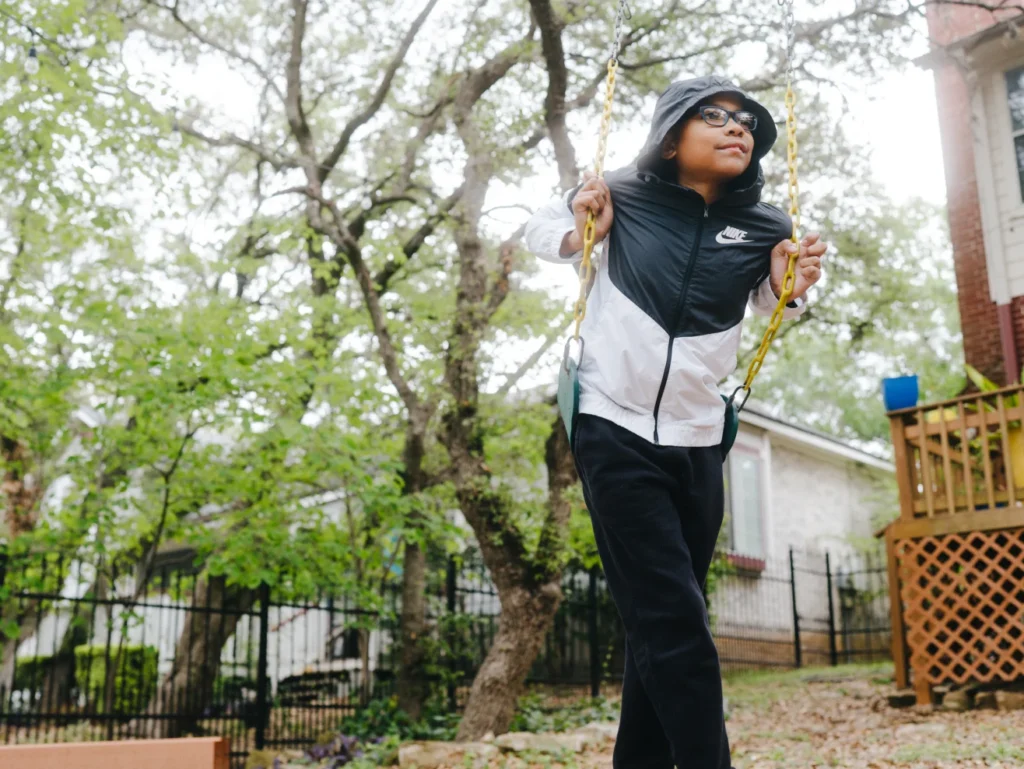
A ‘big pivotal moment’
Mason was Victoria’s first child, so everything about parenting was new to her. She describes him as a happy, healthy boy. But in those first years, she noticed a few things.
He was always really serious. And he would line up all his toys. And then sometimes he would be so obsessed with one certain toy, and if it was missing, he (would have) a hard time. There were little things like that.
He always liked to play by himself. That was one of the things that stuck out to me. Kids would come and talk to him, and he would kind of talk to them a little bit, but he kind of always wanted to do his own thing.
In my head, I thought, “Well, he’s just well-organized, and he’s maybe a little more of a loner and just wants to do his own thing.” I never really worried about him.
When he was about 3, his speech was delayed. But that’s very common in little boys, so I wasn’t worried about it, either. He started to take speech (therapy) at a local elementary school … one hour a day.
And then one day they called me — and I’ll never forget this, because it was always, to me, this is big pivotal moment, and I wish someone would’ve told me face-to-face and not over the phone. And so they just told me, “We think that Mason’s on the spectrum.” And I was like, “The spectrum?” And they said, “We think he could be autistic.”